# Linode Object Storage
Linode Objects Storage is an *S3-compatible* object storage by Linode (aka Akamai Cloud).
#### Step #1: in Linode
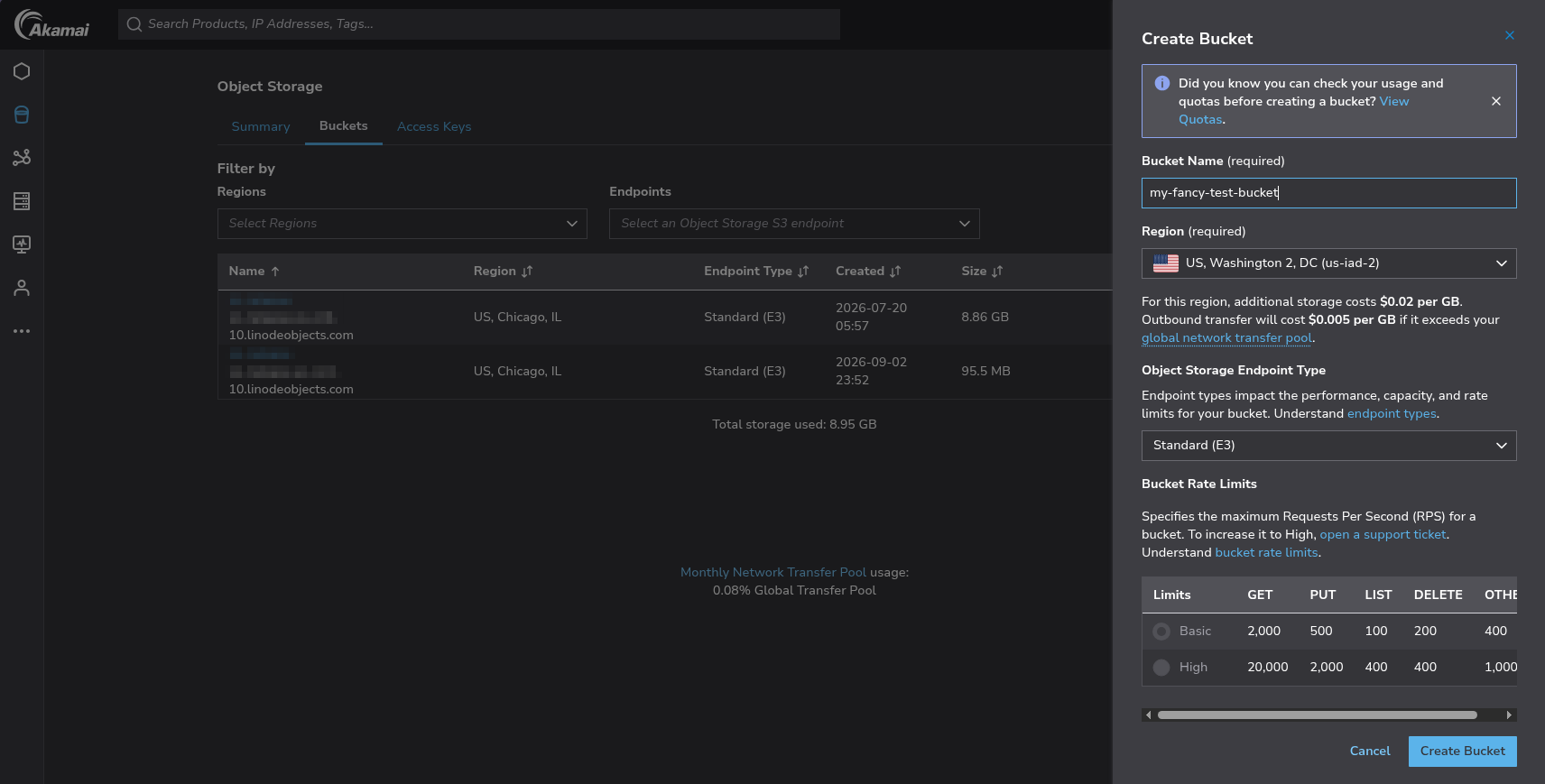
To use this object storage as a backend for SFTP.cloud, the first thing you need to do is creating a bucket in the Linode region of your choice. To do so, open the Linode Management UI in your browser, sign-in, and then:
- Select the **Object Storage** page in the STORAGE section in the sidebar menu
- Select the **Buckets** tab, and click the **Create Bucket** button
- Pick a name and a region for your bucket
- Press the **Create Bucket** in the slide-out configurator once ready
[](https://kb.syncplify.com/uploads/images/gallery/2026-09/bGdimage.png)
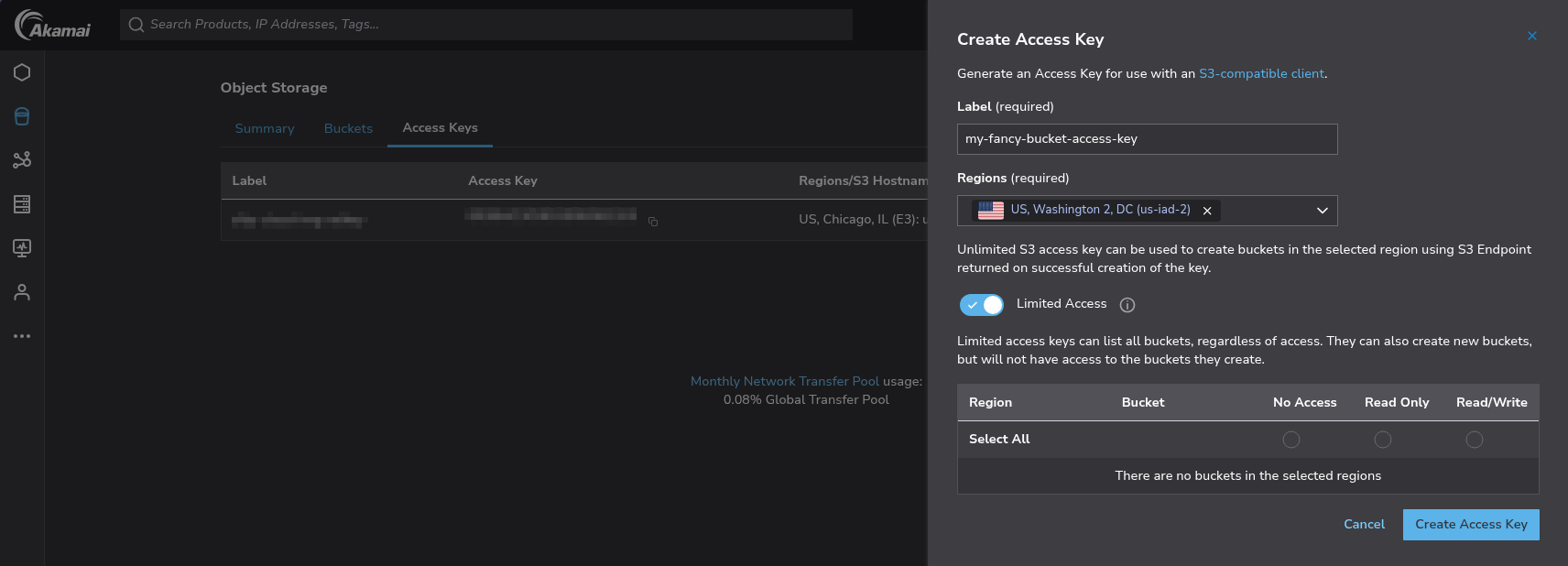
Once the bucket is created, **the next thing you'll need is an Access Key** (and its associated Secret) to access it. You can issue them in the Access Keys tab in the same Linode Management UI section. We recommend you limit the scope of your Access Key only to the bucket(s) you genuinely want to use via SFTP.cloud.
[](https://kb.syncplify.com/uploads/images/gallery/2026-09/9yVimage.png)
That's it for the Linode side. Now let's move to the SFTP.cloud side.
#### Step #2: in your SFTP.cloud Storage Connector
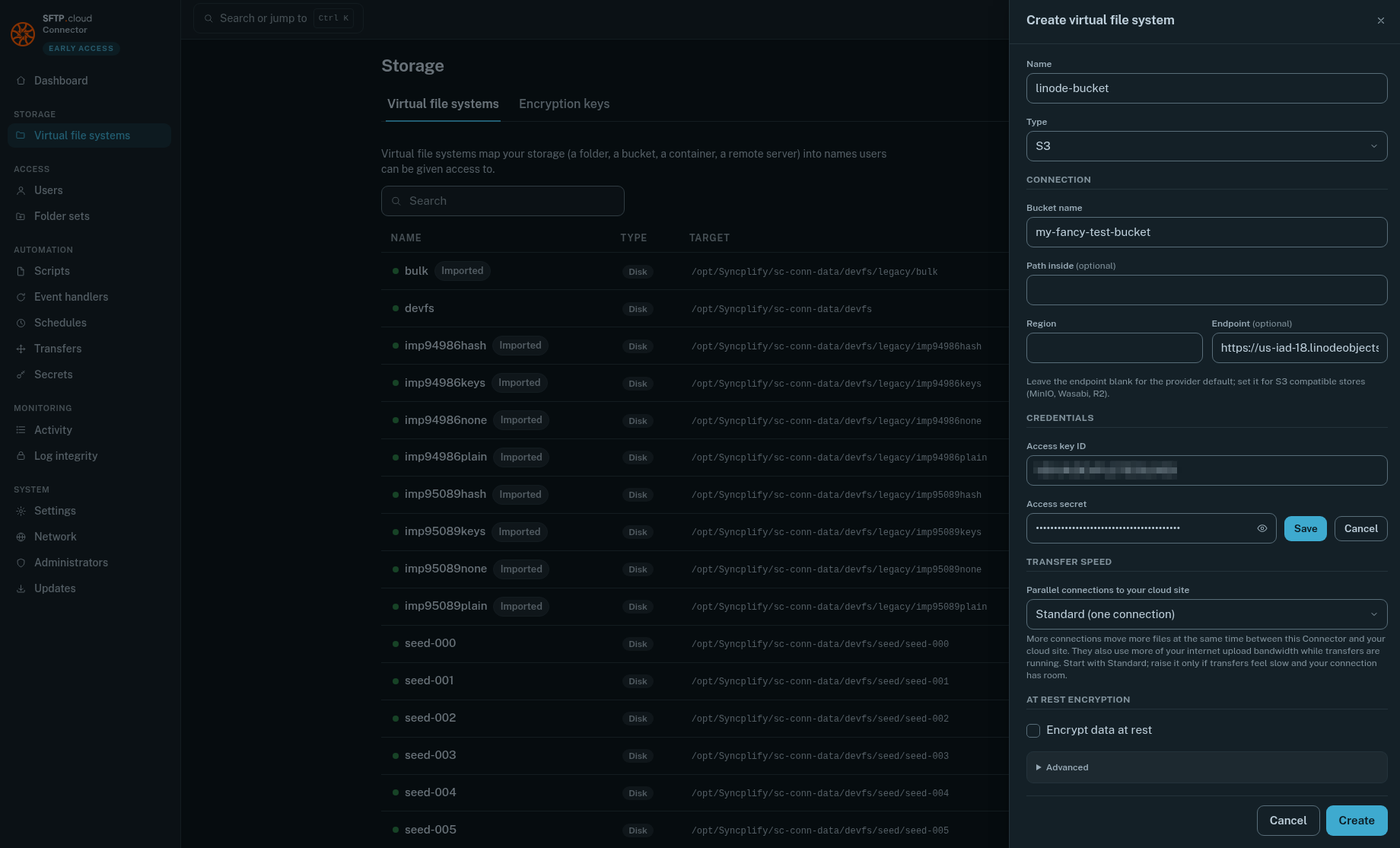
The first thing to do is to add a new **Virtual File System**. For Linode Object Storage in particular there are a few small (but extremely important) details to pay attention to:
- **Type:** `S3` (just like any other S3-compatible object stores)
- **Region:** leave empty
- **Endpoint:** this needs to be the Linode endpoint, **without** the bucket name, so, for example, if you deployed your bucket in the *Washington 2 DC* region, this will simply be `https://us-iad-18.linodeobjects.com`
[](https://kb.syncplify.com/uploads/images/gallery/2026-09/kWcimage.png)
**Do NOT forget** to push the `Save` button next to the **Access secret** after you type it in, or it won't be saved, and nothing will work.
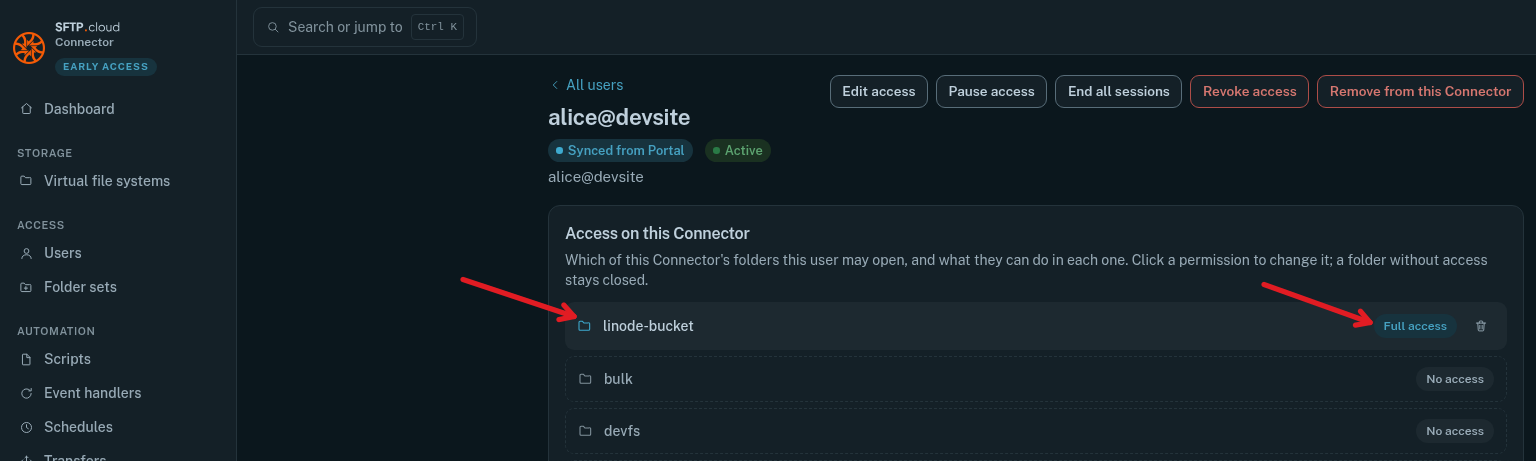
Then, still in the Storage Connector UI, go to the **Users** page, and give your user(s) the desired access to the newly created VFS:
[](https://kb.syncplify.com/uploads/images/gallery/2026-09/fyYimage.png)
#### Finally
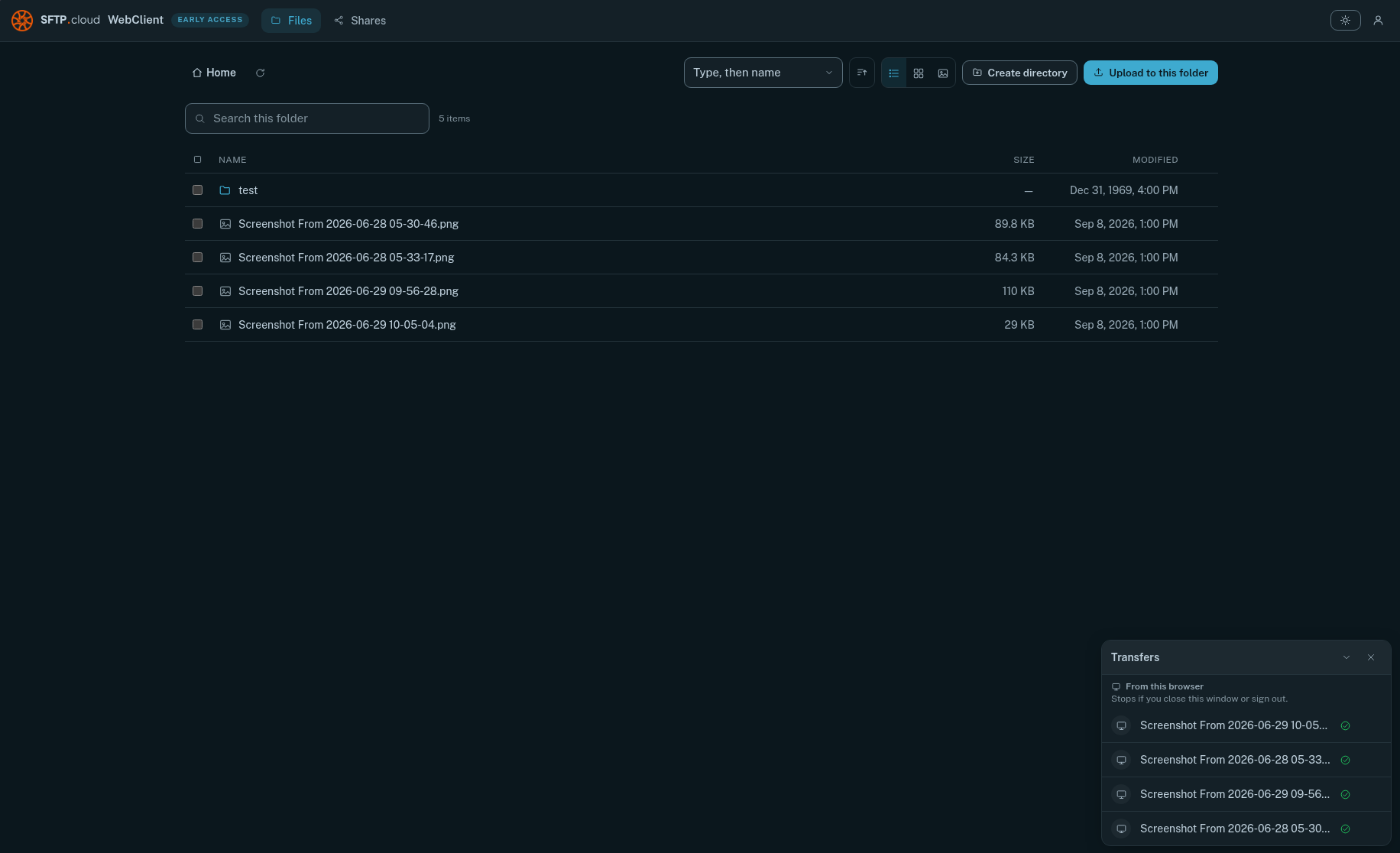
Test it out. Connect to it via your SFTP.cloud WebClient, create a folder, upload some files...
[](https://kb.syncplify.com/uploads/images/gallery/2026-09/BZgimage.png)
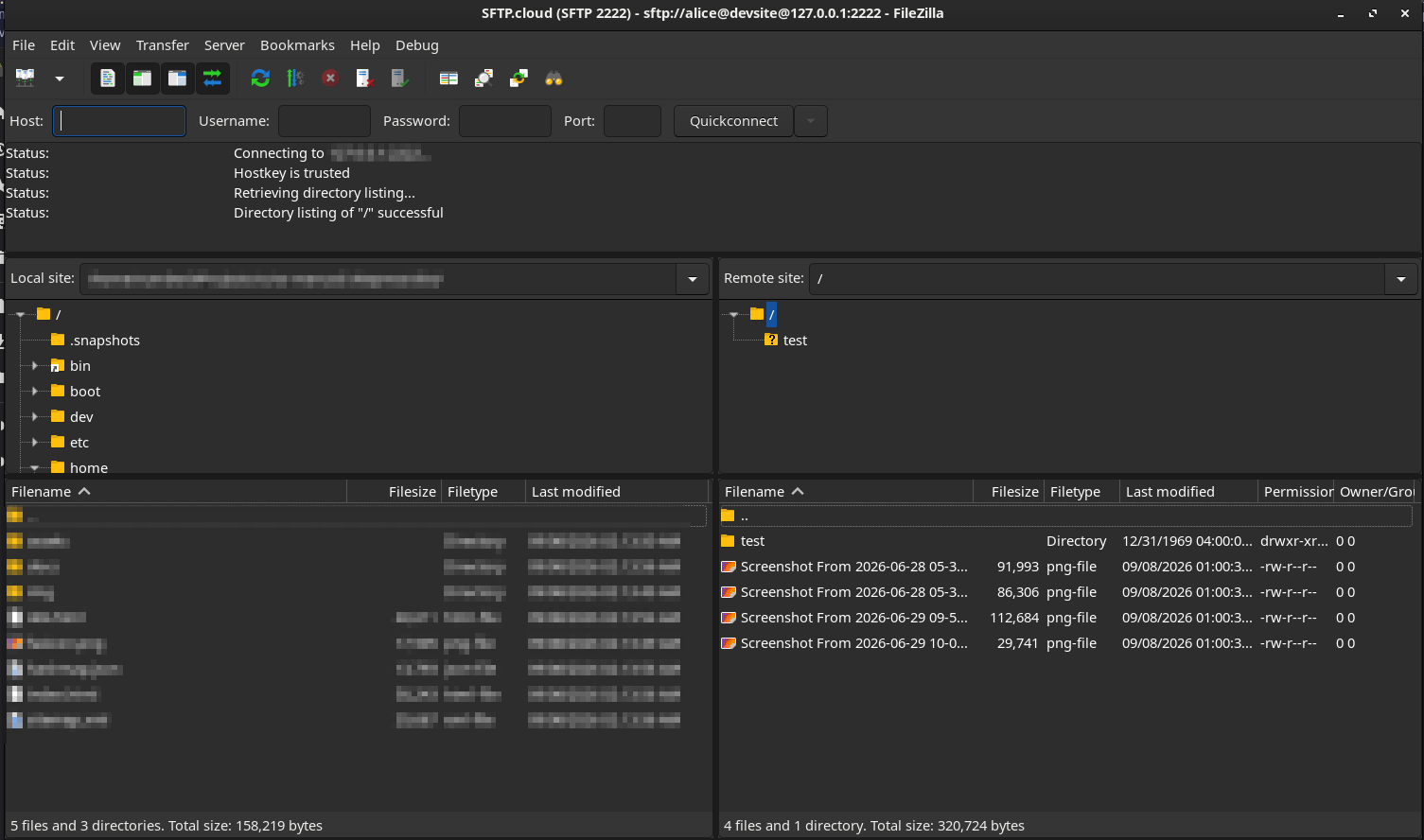
You can also double-check with an SFTP, or FTPS client of course:
[](https://kb.syncplify.com/uploads/images/gallery/2026-09/3R3image.png)
And you're done. That's all there is to it. 😄